


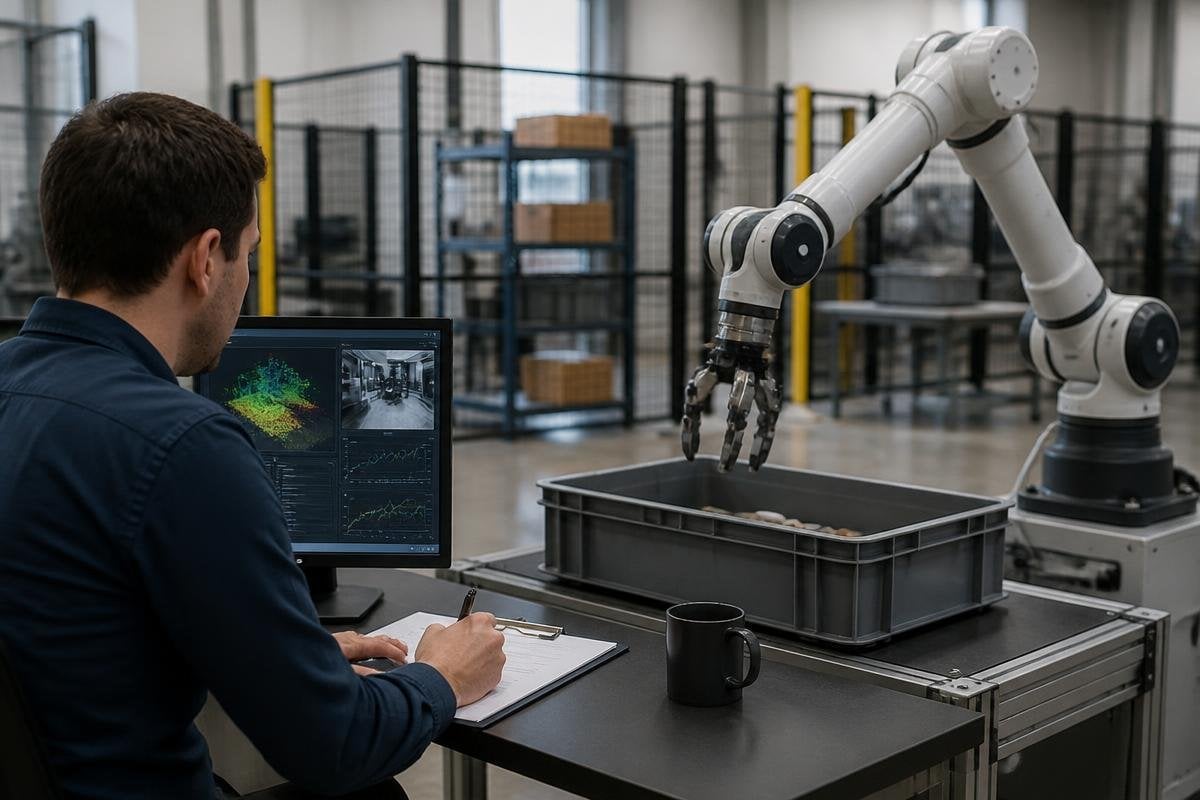
A self-improving robot changes its behavior after it gathers new data. That could mean better grip settings, safer routes, or fewer failed attempts. Each change needs a named person to check the result before the robot uses it.
- Software can adjust after new sensor data
- Physical wear can make old lessons unreliable
- Human checks still matter when mistakes can cause harm
What self-improvement means
The phrase covers several different systems. A robot may update a map after seeing a new obstacle, tune the force used by a gripper, or add examples to the data used by a learning model.
These tasks look similar from the outside, yet they carry different risks. A map update changes where the robot moves. A force update changes how it touches an object. A new model update can affect many tasks at once. The larger the change, the more work a team needs to do before the robot runs near people or costly equipment.
Each system also needs a clear record of what changed. That record should include the old setting, the new setting, the data that caused the update, and the tests that followed. Without it, a failed run becomes hard to trace.
The useful part is the feedback loop
A practical system starts with a task and a way to measure the result. It runs the task, records what happened, and compares the result with a target. It can then change one setting and run the check again.
That loop works best when the task has a clear score. A warehouse robot might count successful moves and contacts with obstacles. An inspection robot might compare images against a known defect set. A research robot might measure how often it places an object inside a marked area.
The score needs limits. A robot that reaches a target faster may also use more force, drain its battery sooner, or move closer to a person.
A single number can hide those costs. The control system needs separate checks for speed, force, battery use, and safe distance.
A self-improving robot can change its behavior without any hardware change. Reporting at Robot24.com is useful when the software version sits beside measured speed, force, and battery use. The next limit is physical: parts wear, sensors drift, and repairs still cost money.
Physical robots age
Software can learn from new data, but the robot’s body changes as it runs. Wheels wear down. A camera can shift. A gripper can lose grip after repeated contact. Those changes can make old training data less useful.
This creates a limit that software alone can’t remove. The system needs checks on its sensors, joints, batteries, and safety controls. A model that worked on a new machine may act differently after months of use.
The same problem appears when a robot enters a new place. A clean factory floor, a busy warehouse, and an outdoor site give the sensors different conditions. Dust, glare, noise, and narrow paths can change what the robot sees and how it moves.
I would trust self-improvement first on tasks with clear limits, repeatable conditions, and a safe way to stop the robot.
What stays with people
A team still needs to decide which changes the robot may make on its own. Small changes to a route can pass through an automatic check. A new grasp strategy may need supervised trials. A change to a safety limit should require a person to approve it.
The approval process should test the robot on data it did not use while learning. It should also keep the old version available, so the team can return to a known setting if the new one fails.
This matters for factories, hospitals, farms, and homes. In each place, the cost of a mistake differs. A dropped box is one problem. A moving arm near a person is another.
A practical check before deployment
Use these questions before allowing a robot to change its own behavior:
- Define the task: write down what success means and what failure looks like
- Limit the change: set the parts of the system the robot may update
- Keep a record: save the data, settings, test result, and approval for each update
- Test new conditions: run the robot with different lighting, surfaces, loads, or objects
- Keep a fallback: store a known version and give a person a clear stop command
These checks turn self-improvement into a controlled engineering process. They also show where the idea still needs work: robots can adjust to patterns, but they don’t set the value of a task or judge harm on their own.
The next useful step is narrower than a robot that improves at everything. It is a machine that learns one task, reports each change, and proves that the new setting works before it reaches the floor.
