


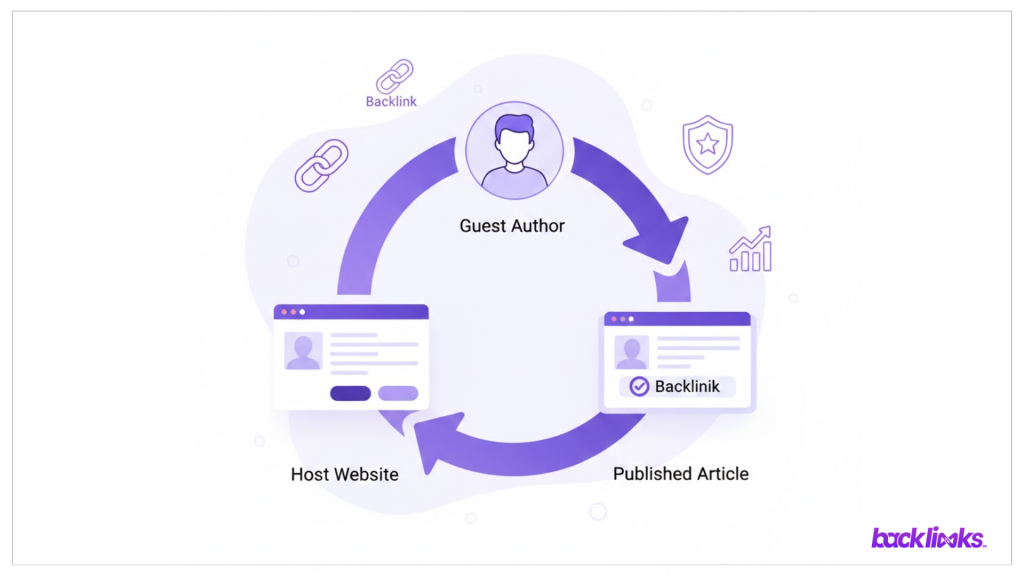
Guest posting can help a business reach readers beyond its own website, but publishing an article elsewhere is not automatically a growth strategy. The value depends on whether the host publication attracts a relevant audience, whether the article offers something useful, and whether the placement supports a clear business goal. Treating these decisions as part of a broader content plan makes guest posting more useful and less likely to become a collection of disconnected links.
Start with the outcome, not the placement
Before looking for publications, decide what you want guest content to accomplish. A company entering a new market might want to introduce its expertise to a specialist audience. A consultant may be building a reputation in a particular field. Another business may want to direct readers to a practical resource on its own site. These aims call for different publications, article topics and calls to action.
Set a realistic measure of success as well. Referral visits, relevant enquiries, newsletter sign-ups and invitations to contribute again can all indicate value. Search visibility may be part of the wider picture, but it should not be the sole test of a placement. A publication with a smaller, highly engaged readership could be more useful than a larger site whose audience has little reason to care about your subject.
Choose publications carefully
Assess a potential host as a reader would. Does it publish recent, substantial articles? Are the topics and level of expertise a good fit for your business? Do the articles appear to be edited, or does the site accept anything that arrives? A credible placement should make sense in its surroundings, not merely provide a place to put a link.
Consider the audience and the article together. A topic that is too broad may have little distinction, while one that is overly promotional can undermine trust. Look for a useful overlap between what the publication’s readers need and what your team genuinely knows. A detailed explanation, a grounded comparison or a lesson from a real business process will usually offer more than a disguised sales pitch.
When evaluating a guest post placement service, ask how it identifies suitable sites and what information it provides about each opportunity. Clarify what is included, such as topic coordination, editorial review or placement reporting, and what remains your responsibility. It is also sensible to understand how the service handles unsuitable sites or a placement that does not meet the agreed requirements. Clear expectations help you assess quality before committing time or budget.
Build an article worth publishing
A host publication is lending you its readers’ attention. Respect that by creating an article with a specific point and practical substance. Explain the problem, offer a method readers can apply, and address limitations where they matter. Use examples only when they clarify the advice, and check factual claims before submission. The piece should still be useful if a reader never clicks through to your website.
Keep the connection to your business relevant rather than forcing it into every section. A concise author description or a contextual link to a genuinely useful resource can give interested readers a next step. The publication’s editorial rules should determine how links are handled. Repeated exact-match phrases, unrelated links or claims that the article cannot support can make otherwise sound work look engineered.
Good execution takes several kinds of work: research, drafting, editing, graphics and sometimes outreach. Small teams may handle these tasks themselves, while others bring in independent specialists for a defined part of the process. A marketplace such as Osdire lets buyers hire freelancers across more than 900 categories, including writing and translation, design, marketing and technical work. Its flat pricing and payment held during an order until the delivered work is approved can be useful when setting clear expectations for a freelance task. The important point is to define the brief, deadline and approval criteria before work begins.
Keep the workflow manageable
A simple process reduces last-minute revisions and helps protect editorial quality:
- Make a shortlist. Record each publication’s subject focus, audience, submission requirements and recent activity.
- Pitch a clear idea. Describe the intended reader, the problem the article addresses and what makes the approach distinct.
- Agree on scope. Confirm word count, deadlines, editorial permissions, any link policy and who is responsible for revisions.
- Review before submission. Check accuracy, originality, tone and compliance with the publication’s guidelines.
- Track the outcome. Note publication date, referral activity, relevant responses and lessons for the next contribution.
Keep records of pitches and follow-ups, too. A shared spreadsheet or project board can prevent duplicate outreach and make it easier to see which topics have already been covered. If a publication declines an idea, ask whether a different angle would suit its readers, but respect a clear rejection and avoid repeated messages.
Measure value over time
Review results after publication rather than judging success on the day an article goes live. Look at whether readers arrived, whether they engaged with the suggested next step, and whether the placement introduced your work to people who matter to the business. Compare results with the original goal, not with a vague expectation that every article will immediately produce leads.
Guest posting works best as one part of a steady communications plan. A handful of well-matched contributions can build familiarity and demonstrate expertise, while rushed placements may consume budget without earning attention. Make each opportunity earn its place through audience fit, editorial quality and a clear reason for contributing. That discipline turns guest content from a one-off promotional tactic into a repeatable way to share useful ideas with the right readers.
