


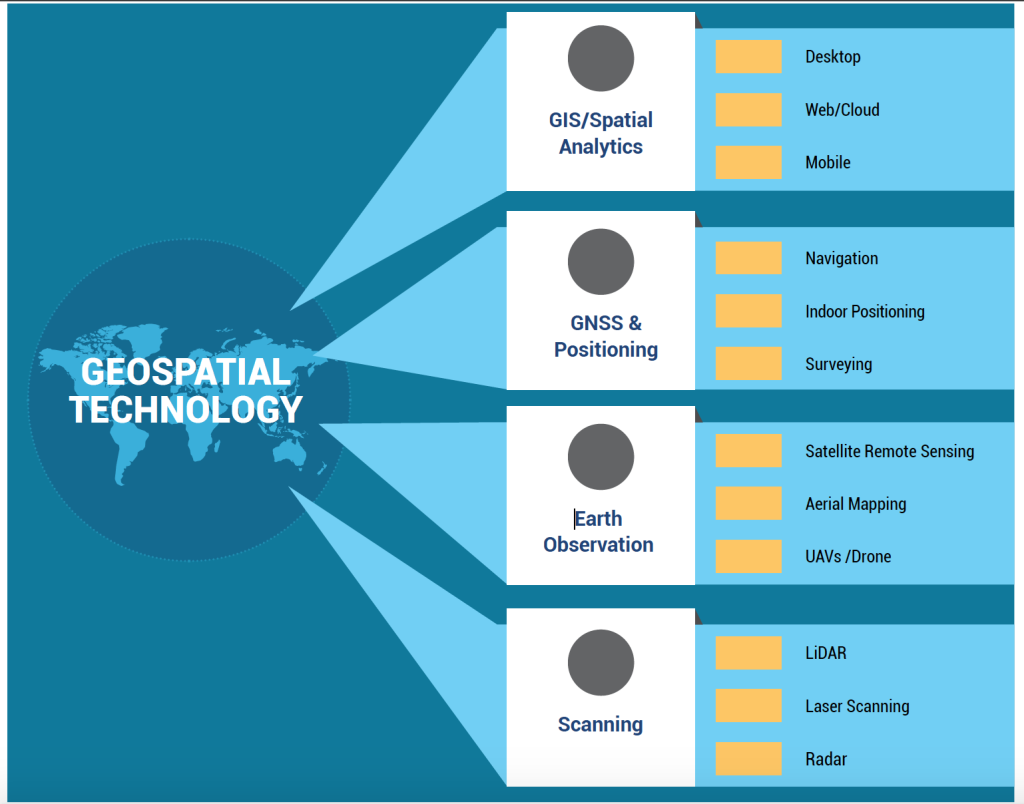
In today’s data-driven world, organizations are constantly looking for ways to gain a competitive edge. One of the most powerful tools in this pursuit is geospatial technology combined with spatial analytics. This technology allows businesses to visualize, analyze, and interpret data in ways that reveal insights about location, trends, and patterns, driving smarter decision-making.
Understanding Geospatial Technology and Spatial Analytics
Geospatial technology encompasses tools like Geographic Information Systems (GIS), remote sensing, GPS, and mapping software. Spatial analytics involves analyzing location-based data to uncover relationships, trends, and patterns that might otherwise go unnoticed. When integrated, these technologies empower businesses to gain actionable insights that enhance operations, improve customer experiences, and optimize resource allocation.
Key Benefits for Businesses
1. Improved Decision-Making
One of the most significant advantages of geospatial technology is its ability to inform decision-making. By overlaying demographic data, market trends, and customer behavior on a map, organizations can identify opportunities and risks in specific regions, making strategic decisions more data-driven.
2. Enhanced Operational Efficiency
Spatial analytics can optimize logistics, supply chain management, and asset tracking. For example, companies can plan delivery routes more efficiently, monitor infrastructure in real-time, or allocate resources where they are needed most, reducing operational costs.
3. Competitive Advantage
Understanding the geographic dimensions of your business environment allows for targeted marketing, risk assessment, and market expansion. Organizations that leverage geospatial insights can anticipate market shifts and respond faster than competitors.
Real-World Applications
Industries across the globe are harnessing the business value of geospatial technology and spatial analytics. Retailers can analyze customer foot traffic to determine store locations. Governments use spatial data to plan urban development and improve emergency response. Energy companies optimize pipeline networks and monitor environmental impact.
The Future of Spatial Analytics in Business
As technology evolves, the integration of AI, IoT, and big data with geospatial tools will further enhance the business value of geospatial technology and spatial analytics. Organizations that adopt these innovations early will be well-positioned to leverage predictive insights, drive innovation, and maintain a competitive edge in their industries.
Conclusion
The business value of geospatial technology and spatial analytics is undeniable. From operational efficiency to strategic decision-making, these tools provide actionable insights that can transform the way organizations operate. Embracing geospatial intelligence is no longer optional—it’s a critical factor for sustained business success.
